Bring an Umbrella
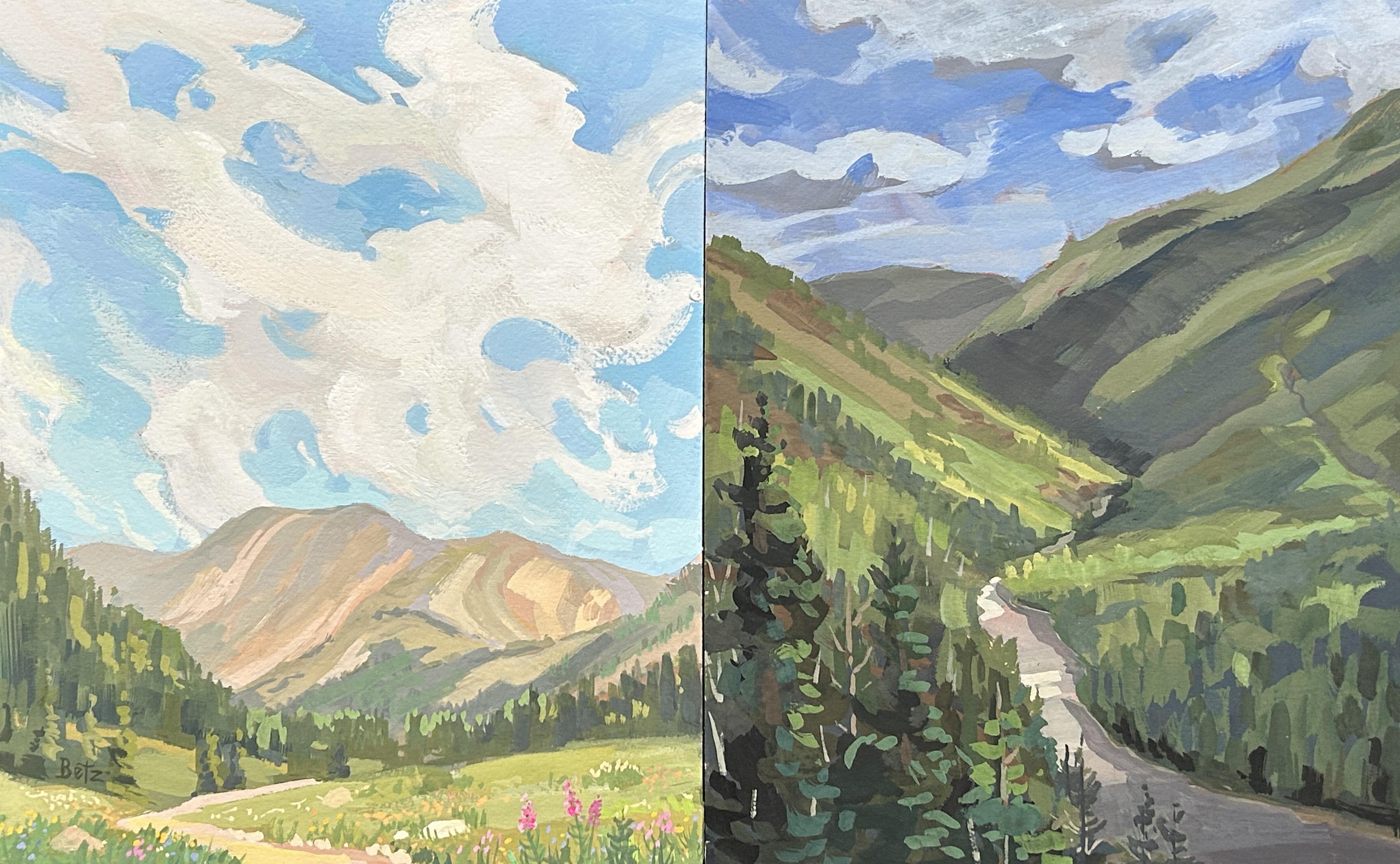
The two paintings above were both created on location. The one on the left was painted in deep shade, while the one on the right was painted in direct morning sunlight. You might notice something strange: the painting from the shade is lighter overall, while the painting from the bright sunshine is much darker. Why is that?
When I got back to my studio and looked at them under my desk lamp, I was kind of shocked by the difference. I really hadn't t noticed it while I was outside painting.
Simultaneous Contrast
Part of what was happening is a classic visual phenomenon called simultaneous contrast, a notorious topic I have fondly discussed with art students over the years. The basic idea is that values appear to shift depending on their context. A light gray will look really light next to black, but when you surround it with white, it suddenly appears dark.
If you paint, or have dealt with values and color in some capacity, you have probably experienced this phenomenon. Maybe you tone your canvas a warm brown, then mix a color on a white palette. The mixture looks one way on the palette, but as soon as you put it onto the toned canvas, it suddenly seems lighter or darker. Or maybe you've carefully picked out carpet or paint, only to put it inside your house and find it looks a different shade as the light passes by during the day.
The paint didn't change, the context did. And when painting outside, that problem gets even trickier.
The day I painted these, I was already dealing with gouache drying quickly in the hot August sunshine and shifting slightly as it dried. Then you add changing sunlight into the equation, such as clouds moving in and suddenly everything is in shadow. A minute later the sun is blazing again.
Plein air painting is full of stuff like this. There is weather, wind, insects, changing light, and the general inconvenience of trying to make a painting while nature refuses to sit still for you. It can be incredibly frustrating! But I also think that is part of why we do it. If you're going to try to capture something as wild and constantly changing as nature, you have to be willing to wrestle with it a little.
Light/Dark Adaptation
There is something else happening here beyond simultaneous contrast, though. Your eyes are also adapting to the overall brightness around you. It's known as Light/Dark Adaptation. Classic example is walking out of a matinee at the movie theatre into the glaring afternoon sunlight. For a moment, everything feels painfully bright until your eyes adjust. The same thing happens in reverse when you walk into a dark room after being outside. Your visual system is constantly recalibrating what it considers bright and dark.
If you use Photoshop, I think of it a little like adjusting the white point balance. Once you select the area that should be white, all the values adjust in relationship to it.
In full sunlight, your brightest point is incredibly bright. Your shadows and middle values are being judged against that enormous range. Because of that, you can easily mix your darker values much darker than they actually need to be just to make them read as shadow. Then, when you bring the painting indoors, where nothing is remotely as bright as direct sunlight, suddenly those darks look overdone.
In deep shade, the opposite can happen. Your entire visual range has shifted downward. A mixture that felt appropriately dark while you were sitting in the shade can look surprisingly lighter once you see it indoors.
Bring a White Umbrella
So what do you do about this? How do you get around it, overcome it...make it stop?!
While there is no way to make it go away, I am convinced that the best way to deal with it requires an umbrella.
I used to think a plein air umbrella was optional. Nice to have, maybe, but a little dramatic. This is basically the same attitude I had toward hiking poles before I broke my ankle. Now I take hiking poles on every hike. And I'm starting to feel the same way about an umbrella.
There will certainly be days when you don't need one. Maybe it is overcast. Maybe you find a naturally shaded spot. Maybe you can position yourself so the light stays fairly consistent. But I'm beginning to see an umbrella less as an accessory and more as part of the basic plein air setup. Yes, it is one more thing to carry, which is why I've usually left it behind....but it can make a huge difference in your ability to judge your colors and values consistently.
There is a catch, though. You don't want to grab just any umbrella from your closet.
A very dark opaque umbrella can block so much light that you basically recreate the problem of painting in deep shade. A strongly colored umbrella isn't ideal either because the light filtering through it can cast that color onto your palette and painting, changing the way you perceive your mixtures.
This is also one reason painters are often warned about wearing tinted sunglasses while judging color. Rose-colored glasses...make everything look rosy!
A white or neutral umbrella that diffuses the light is a much better choice. It brings that extreme outdoor brightness down into a more manageable range without plunging your canvas into darkness.
In full sun, the brightest light in your environment is so intense that everything else gets judged relative to it. That is why you can end up pushing your shadows much darker than you realize. A good plein air umbrella softens that extreme contrast, giving you a more stable environment for judging the painting.
It is not a perfect fix. Outdoor light will never exactly match the light in your studio, and some change in the way a painting looks indoors is inevitable. But if an umbrella can narrow that gap and help me make more reliable value and color decisions while I'm outside, that feels like a pretty good reason to add it to the gear pile. Which means apparently I am now both a hiking pole person and an umbrella person. It only took an ankle fracture and a couple of confusing paintings to get me here!